After three years, I’m in FSY (For the Strength of the Youth) mode again. My third experience after serving with Esther as Admins in 2022 and teacher in 2023. This year, my role as an Area Seventy and the Priesthood Leader of the DACH Alpine session is different and gives me a new and exciting perspective.
This weekend, I spent several days with the fantastic core team (coordinators, session directing couple, administrators) of our FSY DACH Alpine 2026 session at the Area Training in Bad Homburg together with the other core teams from the Europe Central and MENA areas.
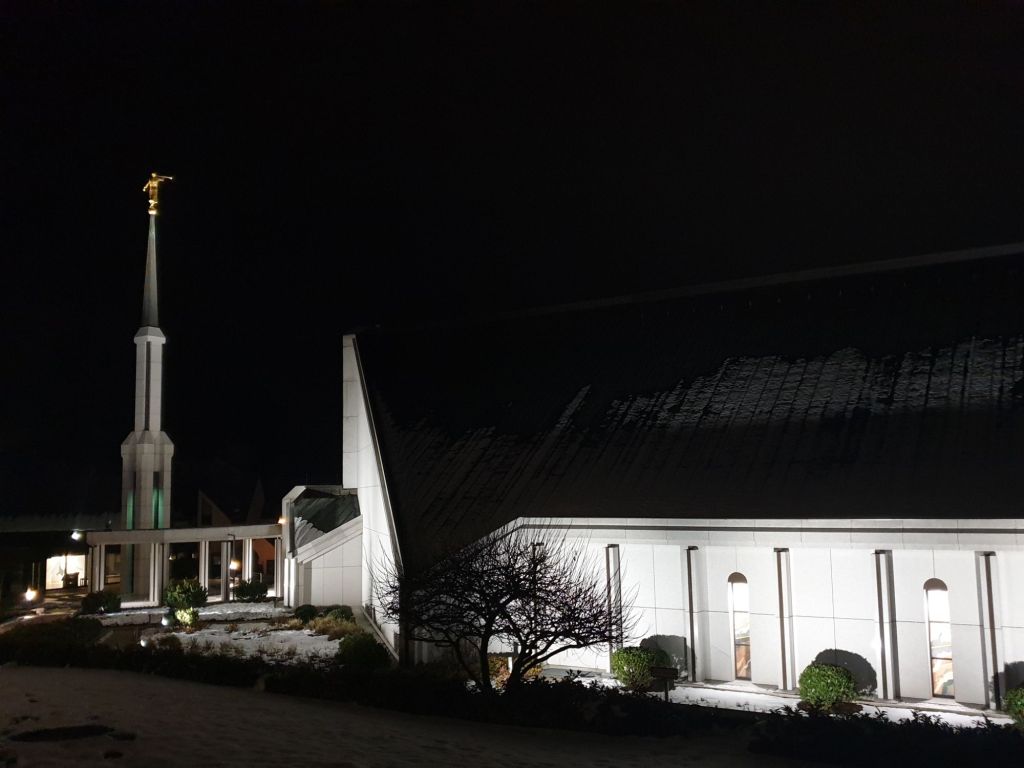
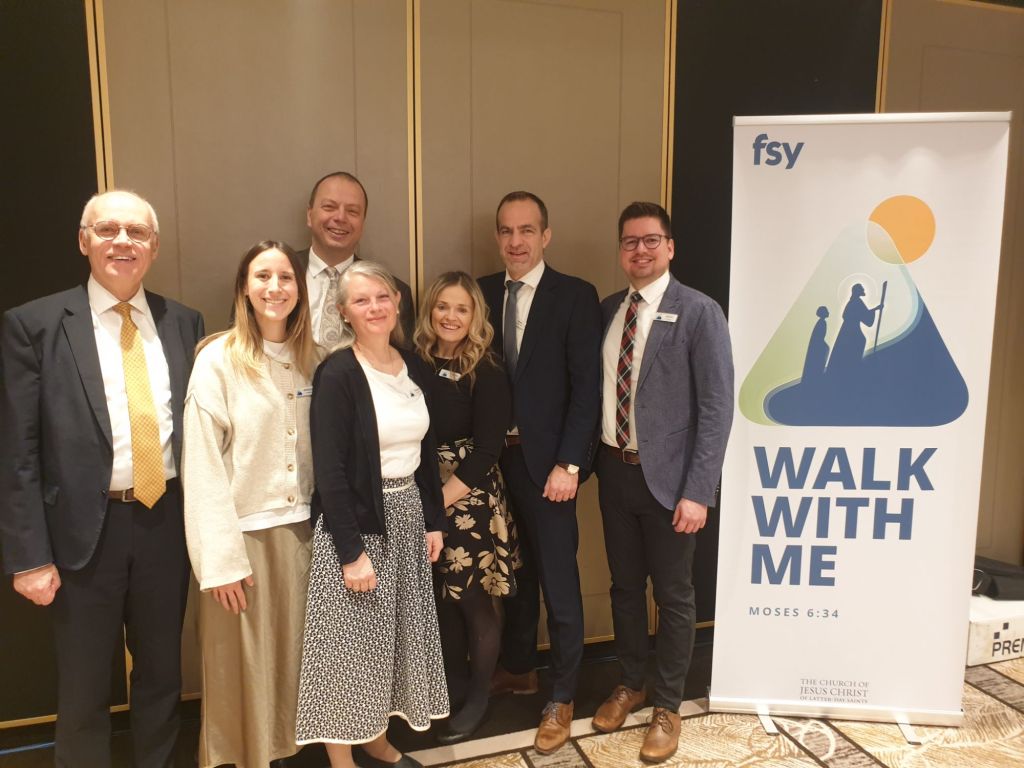
Core Team after Endowment session in the Frankfurt Temple in Friedrichsdorf
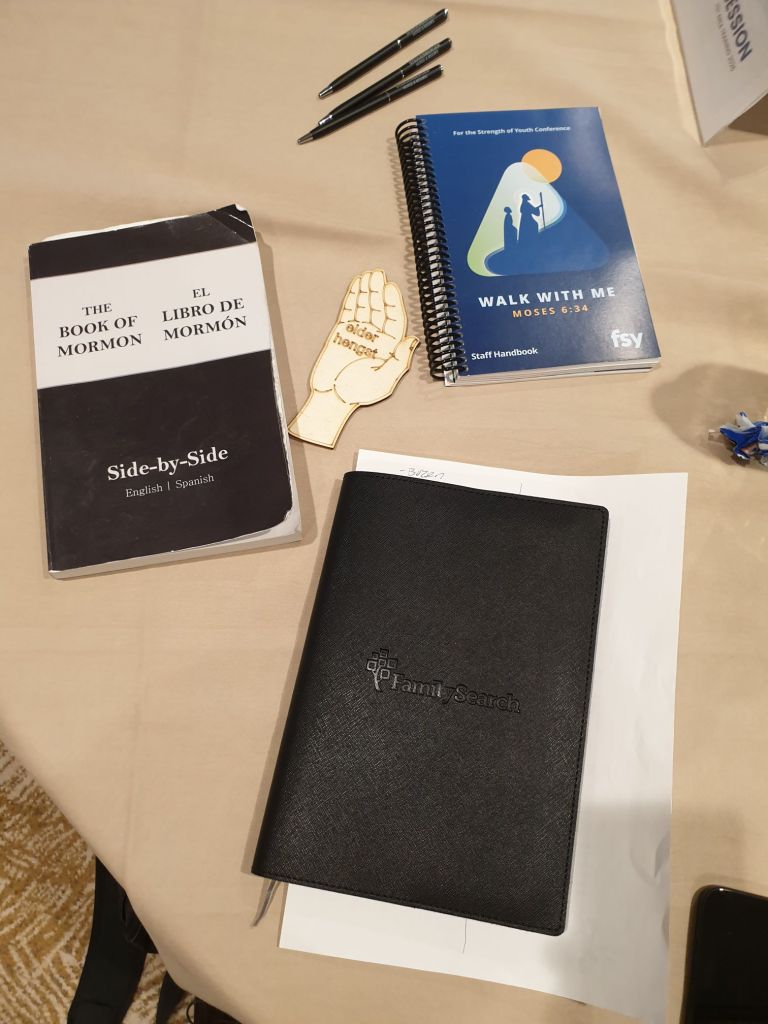
This years theme is „Walk with me“ taken from Moses 6:34 in the Pearl of Great Price. I’d like to quote the invitation from Jesus Christ starting with verse 33:
„33 Say unto this people: Choose ye this day, to serve the Lord God who made you.
34 Behold my Spirit is upon you, wherefore all thy words will I justify; and the mountains shall flee before you, and the rivers shall turn from their course; and thou shalt abide in me, and I in you; therefore walk with me.“
I wish more members of the Church could have those experiences and accept invitations to serve. It comes with sacrifices but this is the way to grow. I have the opportunity to get to know and work with wonderful, brilliant, devoted, faithful and righteous people radiating a great spirit.
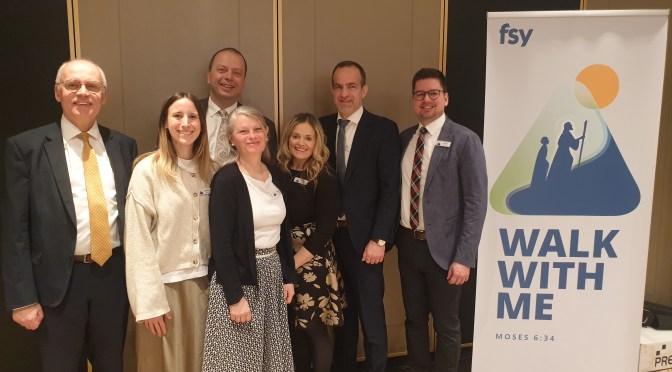
from left to right: J-So, Jakob, Alvin, Camille, Regina, Thomas & Thomas
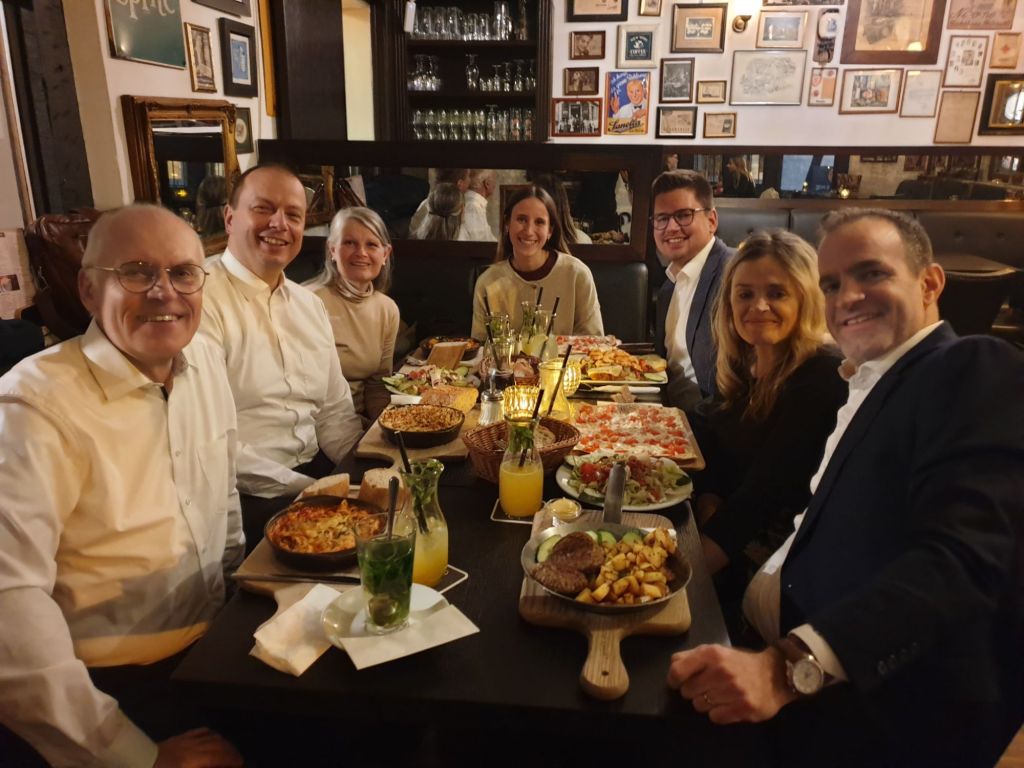
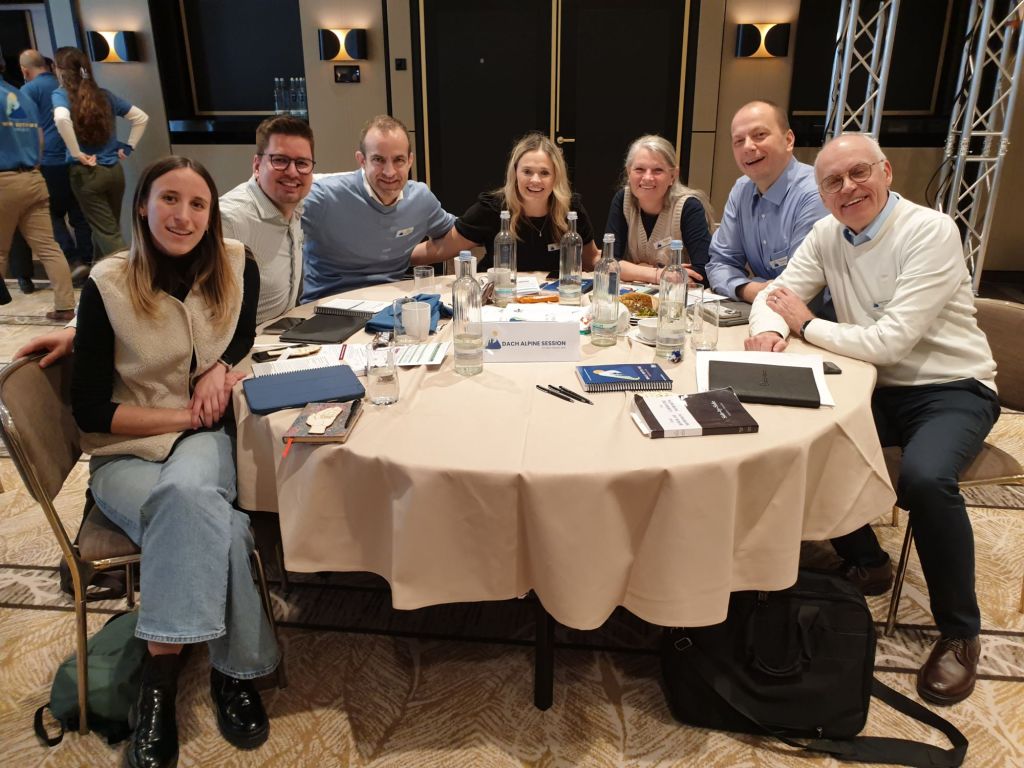
I love the members of my core team and the unity I feel when we’re together. They have great skills and strong testimonies. We study, learn, ponder, feel, laugh and weep together.
Banner & Cheer (without banner)
This weekend has been inspiring and fun – a really good learning experience. It’s kind of a modern „school of the prophets“, preparing so many good people for future tasks and responsibilities.
I’d like to thank all Area Advisors who organized and conducted this training weekend and helped us better understanding our roles and responsibilities. They did an outstanding job.
I’m looking forward to the next milestones: Assistant Coordinator training in March, Mini-FSY, and the actual FSY week with 500+ participants beginning of August. We feel prepared to serve our rising generation. It’s going to be great.
One of the biggest challenges we face in the church, professional and family environment is achieving unity when people with different opinions, prerequisites, interests and goals come together to discuss and make decisions on a matter.
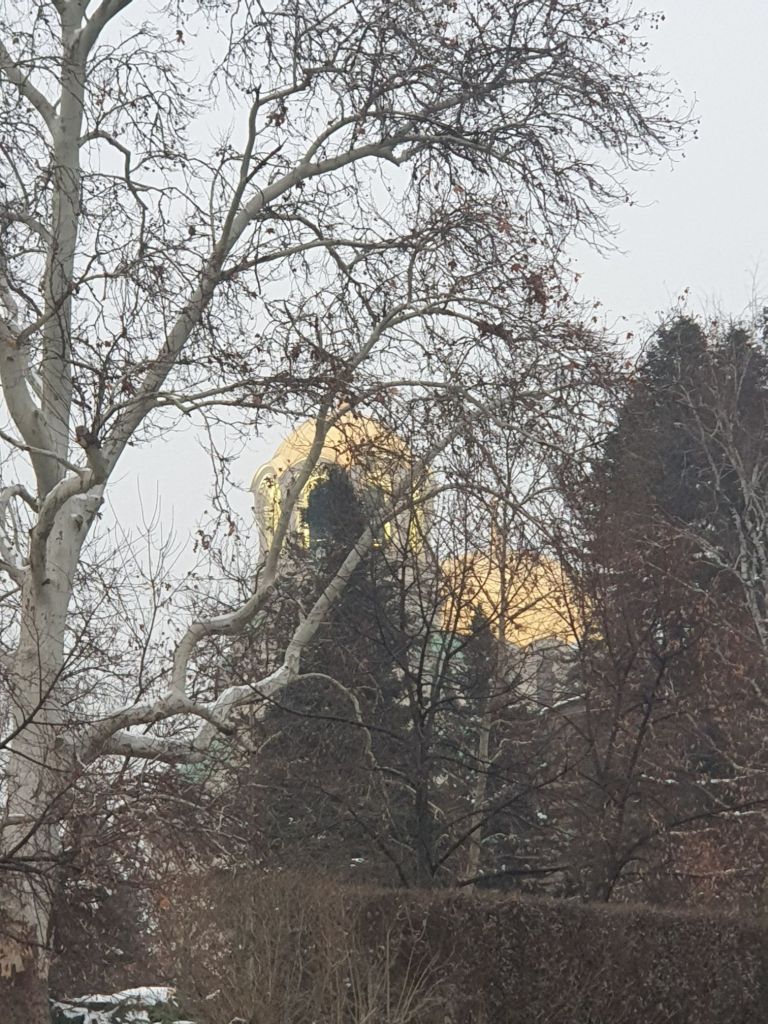
Newski Cathedral Sofia
Politics is no longer a good role model. The differences of opinion and conflicts of interest seem too great. The so-called culture of debate is repulsive and not very productive. However, it is often forgotten that the behaviors that come to light in disputes are a reflection of society.
When we counsel together in the Church of Jesus Christ, we have different ideals.
Jesus Christus has often emphasized: „and if ye are not one ye are not mine.“ (See John 17:21, Doctrine & Covenants 38:27)
He has also emphatically pointed out that organizations that are at odds with each other cannot be successful, but rather weaken themselves decisively: „And Jesus knew their thoughts, and said unto them, Every kingdom divided against itself is brought to desolation; and every city or house divided against itself shall not stand.“ (Siehe Matthäus 12:25)
He also made it clear who the source of all truth is: „The glory of God is intelligence, or, in other words, light and truth.“ (Doctrine & Covenants 93:36) and how important it is to seek truth and remain in it: „If ye continue in my word, then are ye my disciples indeed; And ye shall know the truth, and the truth shall make you free.“ (John 8:31-32).
Last weekend in Sofia, I was once again able to experience how uplifting, strengthening and successful it is when counsel is held in the Lord’s way. We felt this in a powerful way. We have a common, very ambitious goal. At the beginning, we created a strong spiritual foundation based on the scriptures, listened to each other in an appreciative way, learned from each other and exchanged ideas and information.
During the counseling, the goal became more tangible for us. We felt the influence of the Holy Spirit, which strengthened our faith and opened the door for the further process of gaining knowledge.
Chapel of the Church of Jesu Christ in Sofia
We read in Doctrine & Covenants 88:122:
„Appoint among yourselves a teacher, and let not all be spokesmen at once; but let one speak at a time and let all listen unto his sayings, that when all have spoken that all may be edified of all, and that every man may have an equal privilege.„
And in verse 125:
„And above all things, clothe yourselves with the bond of charity, as with a mantle, which is the bond of perfectness and peace.„
Of course, this applies equally to women and men.
Information comes before inspiration. When this is observed, both coexist, and those who counsel together have the humility and desire to subsequently accept counsel or revelation from God, their personal conduct and heart allow the Holy Spirit to work, and are willing to neglect their own personal agenda when necessary, we achieve what is meant in the previous verses.
The „teachers“ in this case are not those with the strongest opinions or those who know everything better. Ideally, the teacher is the Holy Spirit. Those who consult with each other may initially have different opinions and also defend them. But if the principles of God are followed, a process of convergence will occur. Everyone will feel the influence of the Holy Spirit and learn from it.
It can take time for everyone in the council to understand this process. Studying the revealed Word of God together (not some derivative of it) and praying and fasting are essential. The truths that God wants to teach us with the help of the Holy Spirit are not a matter of opinion. They become manifest by following the process and lead to inspired decisions instead of bad compromises that somehow try to please everyone. The latter has been proven to rarely work well, as we can constantly observe in society.
Do we always manage to do this when we counsel with each other in church? Unfortunately not always. But the Lord has given us very good tools for diagnosing problems. One of the best and most comprehensive can also be found in Doctrine & Covenants 121:34-45:
„34 Behold, there are many called, but few are chosen. And why are they not chosen? 35 Because their hearts are set so much upon the things of this world, and aspire to the honors of men, that they do not learn this one lesson— 36 That the rights of the priesthood are inseparably connected with the powers of heaven, and that the powers of heaven cannot be controlled nor handled only upon the principles of righteousness. 37 That they may be conferred upon us, it is true; but when we undertake to cover our sins, or to gratify our pride, our vain ambition, or to exercise control or dominion or compulsion upon the souls of the children of men, in any degree of unrighteousness, behold, the heavens withdraw themselves; the Spirit of the Lord is grieved; and when it is withdrawn, Amen to the priesthood or the authority of that man. 38 Behold, ere he is aware, he is left unto himself, to kick against the pricks, to persecute the saints, and to fight against God. 39 We have learned by sad experience that it is the nature and disposition of almost all men, as soon as they get a little authority, as they suppose, they will immediately begin to exercise unrighteous dominion. 40 Hence many are called, but few are chosen. 41 No power or influence can or ought to be maintained by virtue of the priesthood, only by persuasion, by long-suffering, by gentleness and meekness, and by love unfeigned; 42 By kindness, and pure knowledge, which shall greatly enlarge the soul without hypocrisy, and without guile— 43 Reproving betimes with sharpness, when moved upon by the Holy Ghost; and then showing forth afterwards an increase of love toward him whom thou hast reproved, lest he esteem thee to be his enemy; 44 That he may know that thy faithfulness is stronger than the cords of death. 45 Let thy bowels also be full of charity towards all men, and to the household of faith, and let virtue garnish thy thoughts unceasingly; then shall thy confidence wax strong in the presence of God; and the doctrine of the priesthood shall distil upon thy soul as the dews from heaven.„
One can imagine how much better off we could be if these principles of God were applied more often.
It doesn’t always work. We are all not perfect. From time to time there may be council meetings that have not edified, where the foundations for receiving inspiration have not been laid well and it has been more about the tense exchange of controversial opinions than about experiencing the will of God. It is in the latter that the greatest power lies.
Should we give up because this process is not easy to implement? Of course not.
The two greatest commandments, to love God and our neighbor, help us to deal with difficulties and to control our own pride.
We can constantly work on making things better and experience how things change for the better, step by step.




 Thomas Hengst